
EMG Testing for Nerve and Muscle Conditions
Accurate diagnostic testing to identify nerve compression, muscle disorders, and the cause of pain, weakness, numbness, or tingling.
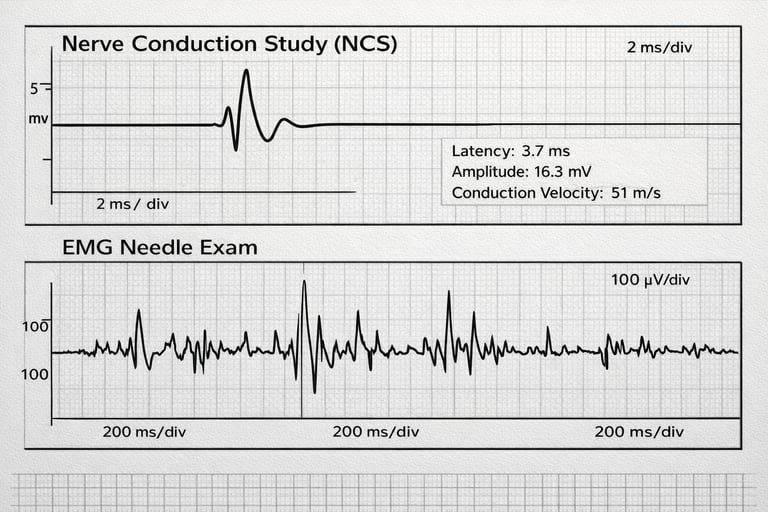
Electromyography (EMG) is a diagnostic test used to evaluate how well your nerves and muscles are working. It helps your doctor understand whether symptoms such as pain, numbness, tingling, weakness, or muscle cramping are caused by a nerve problem, a muscle disorder, or an issue where nerves and muscles connect.
EMG testing is often performed together with a nerve conduction study (NCS), which measures how quickly and effectively electrical signals travel through your nerves. Together, these tests provide valuable information that cannot be seen on X-rays or MRI scans alone.
Why EMG Testing Is Performed
EMG testing helps identify the source of nerve and muscle symptoms and can assist in diagnosing conditions such as:
Carpal tunnel syndrome
Pinched nerves in the neck or lower back (radiculopathy)
Peripheral neuropathy
Nerve injuries or compression syndromes
Muscle disorders
Causes of unexplained weakness, numbness, or tingling
By pinpointing where the problem is coming from, EMG testing helps your doctor create a more accurate and targeted treatment plan.
What to Expect During the Test
The test is typically done in the office and usually takes 30 to 60 minutes, depending on how many areas are being evaluated.
You may feel brief, mild discomfort during parts of the test, especially during the EMG portion, but most patients tolerate it well.
No anesthesia is usually required.
You can return to normal activities the same day in most cases.
Your provider will explain each step as the test is performed and answer any questions you have along the way.
Is EMG Testing Painful?
Most patients describe EMG testing as uncomfortable but manageable, not painful. The nerve conduction portion feels like small electrical pulses, and the EMG portion involves quick, brief needle insertions into muscles. Any discomfort is usually short-lived.
How Are The Results Used?
The EMG results help your doctor confirm or rule out specific nerve or muscle conditions, indentify the location and severity of nerve damage or compression, and decide on which treatment is most appropriate, such as injections, physical therapy, medications, or other interventions.
How To Prepare For An EMG Test?
We recommend you avoid wearing lotions or oils on your skin on the day of the test for accurate results, wear comfortable and loose fitted clothing, and tell your provider about any medical conditions, implanted devices, or medications you take.
PAIN INSTACARE
"Best Pain Relief Possible"
Contact Us
paininstacare@gmail.com
1-888-PAIN-121 | 1-888-7246-121
© 2026. All rights reserved.


FAX: 1-856-482-7245
1-856-482-7246
100 Springdale Rd, Suite B5, Cherry Hill, NJ 08003
1420 Walnut St, Suite 406, Philadelphia, PA 19102
PAIN INSTACARE @ ECHELON FITNESS 1160 White Horse Rd, Voorhees, NJ 08043